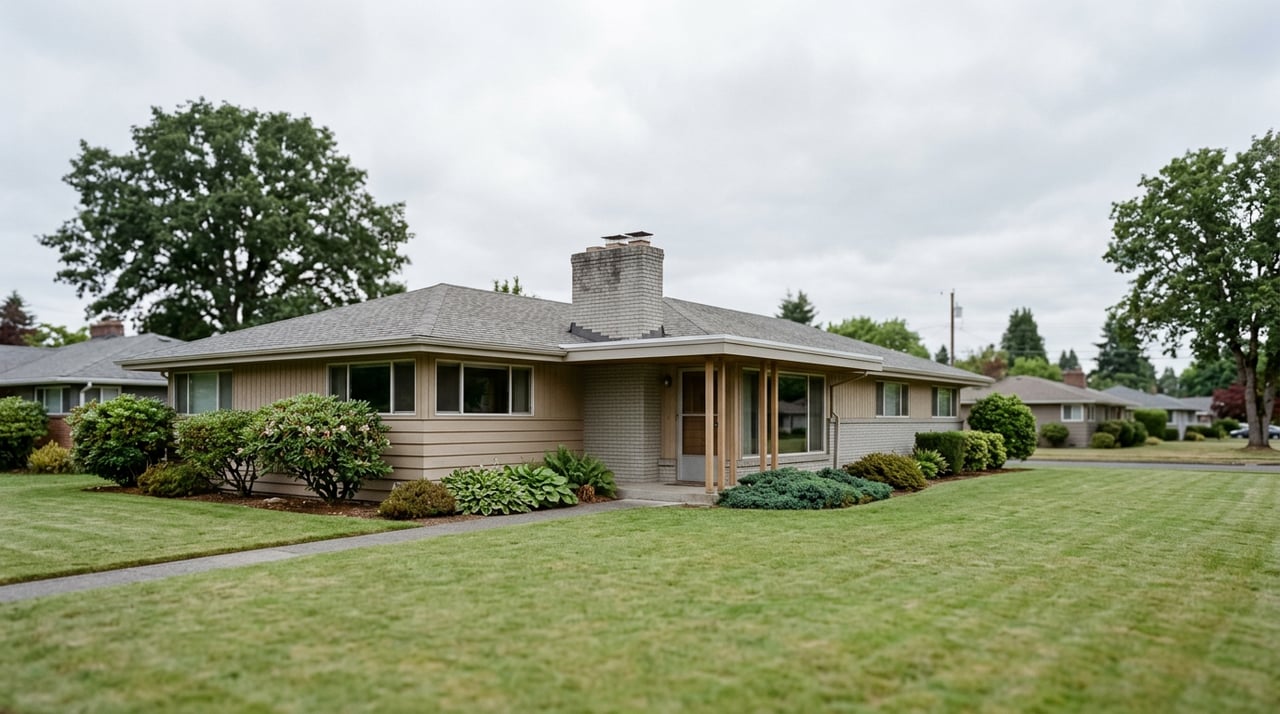
Something changed in Broadview's math this year that has nothing to do with the housing market and everything to do with a zoning map. For decades, the neighborhood's oversized lots were mostly a maintenance line item: more lawn to mow, more fence to paint, more perimeter to insure. Seattle's new density rules turned that same acreage into buildable capacity. The catch is that this only pencils on one side of the neighborhood. The view lots on the bluff that gave Broadview its name got the same legal permission and almost none of the practical benefit.
That split is the part a generic zoning explainer skips, and it matters if you own an older Broadview home, are shopping one, or are sizing up a lot for something more ambitious than a single house.
What the Code Actually Changed
Seattle's citywide update to Neighborhood Residential zoning took effect at the start of this year. The headline rule is simple: the update allows more housing on many residential lots than before. A handful of specifics matter more than the topline number:
- A lot can now be covered by structure up to roughly half its area for a multi-unit project, as the Seattle Department of Construction and Inspections explains.
- Front and rear setback requirements still apply.
- Height limits still apply.
- Accessory dwelling units remain an option.
None of this requires anyone to build anything. A homeowner can leave a single house exactly as it sits. What changed is the ceiling, and a ceiling only matters to the lot it sits on top of.
Why Broadview's Lot Size Was Always the Interesting Variable
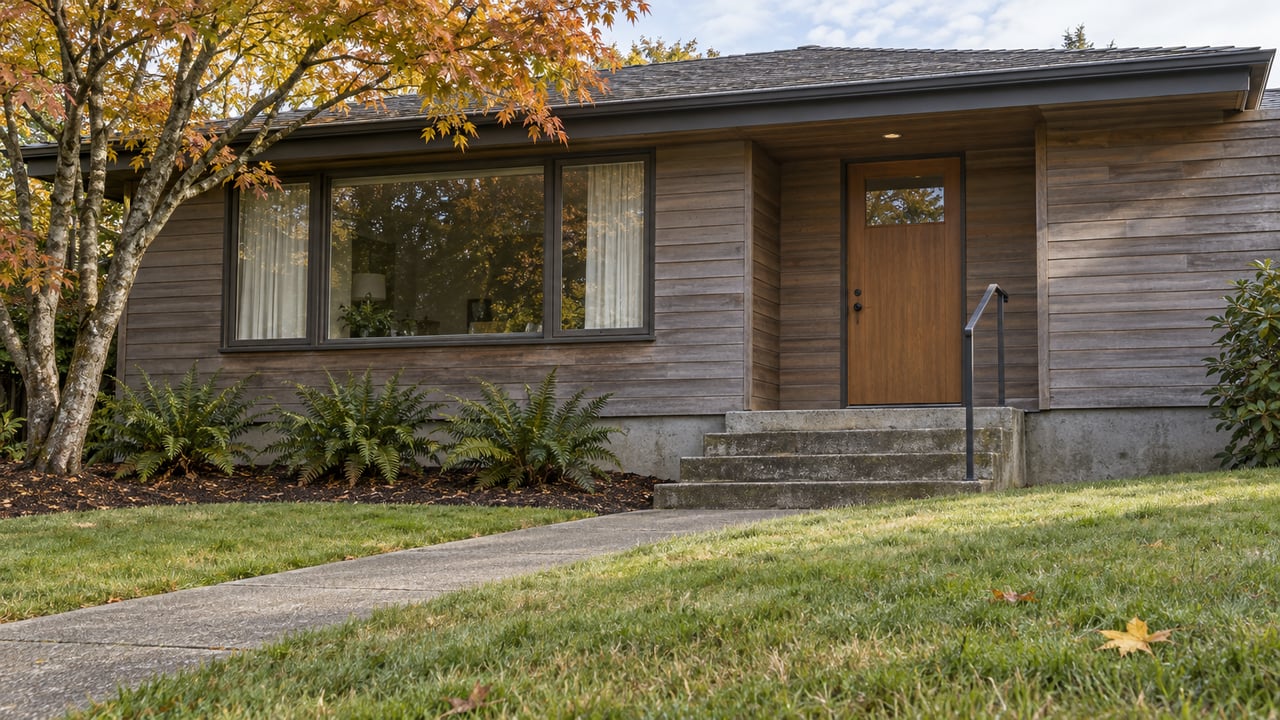
A standard Seattle residential lot runs close to 5,000 square feet. Broadview's housing stock, built mostly between 1940 and 1980, sits on something bigger. Current and recently sold listings in the neighborhood commonly show lots in the 7,500 to 8,700 square foot range, roughly half again to nearly double the citywide standard, holding classic ramblers, splits, and a growing number of remodeled mid-century homes.
Under the old rules, that extra land bought privacy and yard space and not much else. Under the new coverage math, it buys buildable footprint. A 50 percent coverage allowance on an 8,000 square foot lot produces a meaningfully larger legal building envelope than the same percentage on a standard 5,000 square foot lot elsewhere in the city. The lot that used to just cost more to maintain now has more theoretical square footage sitting inside it, waiting on a design and a budget.
Theoretical is the operative word.
A lot doesn't gain extra homes just because the code allows them. It gains them if a contractor can build them for a number that still works.
The Split Broadview's Own Geography Built In
Broadview isn't one topography. The neighborhood is bounded by Puget Sound to the west, the Seattle city limit at NW 145th Street to the north, Carkeek Park to the south, and Greenwood Avenue N to the east. Everything east of there is Bitter Lake. That eastern half of Broadview is comparatively flat and has historically been the more modest, more affordable side of the neighborhood. Moving west toward the Sound, the land drops off a genuine bluff, with the BNSF Railway mainline running along the shoreline below it. That's the slope that gives the neighborhood its sweeping Puget Sound and Olympic Mountain views, and it's also the slope that makes construction expensive.
Here's how the same zoning behaves differently depending on which side of Greenwood you're standing on:
| Flat lots (east Broadview) | Bluff lots (west Broadview) | |
|---|---|---|
| Typical lot size | 7,500 to 8,700+ sq ft | Often similar or larger |
| Site condition | Level, standard excavation | Steep grade, slope stabilization likely |
| Effective use of 50% coverage rule | Close to the full legal allowance is realistic | A meaningful share of the "legal" footprint may be unbuildable or cost-prohibitive |
| Added cost before construction begins | Standard permitting and utilities | Geotechnical review, retaining structure, potentially structural engineering for foundations on grade |
| Practical near-term use of new zoning | ADU addition, DADU, or small multi-unit project is often financially sound | Zoning upside is real on paper, but often stays theoretical unless the home is already a full teardown |
Slope, tree retention, and stormwater requirements don't disappear because a lot is now allowed to hold more units. They get layered on top of a bigger allowance, and on a steep site, those costs can eat the entire advantage that lot size was supposed to create. This is the general pattern across Seattle's hillier infill lots: the unit count on paper goes up while the usable, cost-efficient build area goes down. Broadview simply has an unusually clean version of both sides of that pattern within a few blocks of each other.
What This Means If You're Buying, Selling, or Holding One of These Lots
Single-family homes in Broadview have sold for a median near $1.12 million over the six months ending in September 2026, on a typical size of about 2,175 square feet, which works out to roughly $515 a square foot. That price is attached to the house. It says very little about what the lot underneath it is now allowed to hold, and that gap is exactly where the new value is hiding or, on the bluff, not hiding at all.
If you're evaluating an older Broadview home on a flat eastern lot, the ADU or small addition math is worth running now rather than assuming it still looks like it did two years ago. If you're looking at a view property on the slope, treat the zoning bump as a nice-to-have on the listing sheet rather than the reason to pay a premium. The bluff's actual constraint was never the code. It was always the hillside. For the general condition issues that come with a home from this era, the questions to ask before you write an offer haven't changed much, whichever side of the neighborhood you're on.
Why the Nearby Train Station Isn't the Real Story Here
It's tempting to credit any of this to Pinehurst Station, the Link light rail stop at NE 130th Street and I-5. But Pinehurst sits east of Broadview's own boundary at Greenwood Avenue, in the Pinehurst neighborhood proper. We wrote separately about what that station's arrival means for daily life nearby. For the zoning question specifically, the lot-size story stands on its own, independent of the train.
A Few Questions This Raises
Does the new zoning mean my Broadview lot can support a multi-unit project? "Allowed" and "financeable" are different tests. Slope, tree coverage, utility capacity, and lot shape all still apply before a specific project gets approved.
Do I have to build multiple units to sell my home? No. A single-family home remains a completely normal, sellable property. The zoning change adds optionality for a future buyer or for you, it doesn't remove the option to sell as-is.
Is a view lot on the bluff a bad investment because of the slope costs? Not at all. Broadview's view lots carry their value for the same reason they always have, the outlook toward the Sound and the Olympics. The point isn't that bluff lots are worse. It's that their new zoning headroom shouldn't be the reason you pay more for one.
If you're weighing a purchase on either side of Broadview, or trying to figure out what your current lot is actually worth to redevelop rather than what the zoning map technically permits, that's a conversation worth having before you list or make an offer. Samie Bryan has spent two decades pricing, renovating, and managing property across Northwest Seattle, and can walk through what a specific lot's numbers look like once the slope, the setbacks, and the real construction costs are on the table. Let's Connect.
This article is general information, not legal, tax or financial advice. Consult a qualified professional about your situation.