Curious whether Shoreline’s zoning changes could open up new options for your property? You are not alone. Many homeowners and buyers are hearing terms like middle housing and ADUs and wondering what is actually allowed, what still requires careful review, and what those changes could mean for value and future flexibility. This guide breaks down Shoreline’s new rules in plain English so you can better understand your next move. Let’s dive in.
Shoreline’s Housing Rules Have Changed
Shoreline has been moving toward more small-scale housing choices in established neighborhoods. On January 13, 2025, the City Council adopted middle housing into the Development Code through Ordinance 1027 as part of a broader zoning update.
According to the city, these updates were designed to expand housing choices, clarify regulations, and consolidate zoning designations. In practical terms, that means more property owners may now have options beyond the traditional one-house-per-lot pattern, depending on the lot and zone.
Another major change came later in 2025. On August 11, 2025, Shoreline passed Ordinance 1043, which eliminated vehicle parking minimums for most uses citywide effective August 18, 2025.
That does not mean parking rules disappeared altogether. The city still keeps parking design standards and has increased bike parking requirements, but removing many minimums can make infill projects easier on some sites.
What Middle Housing Means
Middle housing is a building form category, not a price category. Shoreline explains that middle housing refers to homes that are compatible in scale, form, and character with single-family houses but contain two or more attached, stacked, or clustered homes.
That distinction matters because many people hear new zoning rules and assume the city is talking about income-restricted housing. Shoreline’s FAQ makes clear that middle housing is about the type and layout of the building, not rent control or regulated pricing.
Types of Middle Housing
Shoreline and Washington Commerce identify several housing types that fall into this category:
- Duplexes
- Triplexes
- Fourplexes
- Fiveplexes
- Sixplexes
- Townhouses
- Stacked flats
- Courtyard apartments
- Cottage housing
Not every lot can support every one of these forms. What may work depends on zoning, lot size, setbacks, height limits, tree rules, critical areas, and the permitting path.
How Shoreline’s NR Zones Differ
One of the easiest ways to understand Shoreline’s new framework is to think of its neighborhood residential zones as a gradient. Some areas are intended to stay lighter in scale, while others allow a more urban form.
NR3: Lower-Intensity Neighborhood Residential
NR3 is the lightest-touch neighborhood residential zone. It is intended to have a more open feel and more separation between structures.
Shoreline’s summary sheets show that NR3 has a minimum lot size of 7,200 square feet and a height limit of 23 feet. Those standards can shape what kind of additional housing is realistic on a property.
NR2: Mid-Scale Transition Zone
NR2 is the middle step in the city’s neighborhood residential framework. It is described as having a more compact feel and serving as a transition zone.
In NR2, the minimum lot size is 5,000 square feet and the height limit is 30 feet. That can create more flexibility than NR3, though site-specific rules still matter.
NR1: Most Urban Neighborhood Residential
NR1 is the most urban of the three neighborhood residential zones. It is intended for more attached and stacked housing near commercial areas and frequent transit.
Shoreline’s zone summary shows NR1 has a minimum lot size of 2,500 square feet, a height limit of 35 feet, and no maximum housing-per-lot limit. Even so, that does not mean every parcel can be built out the same way, since lot conditions and development standards still apply.
ADUs Are Still a Key Option
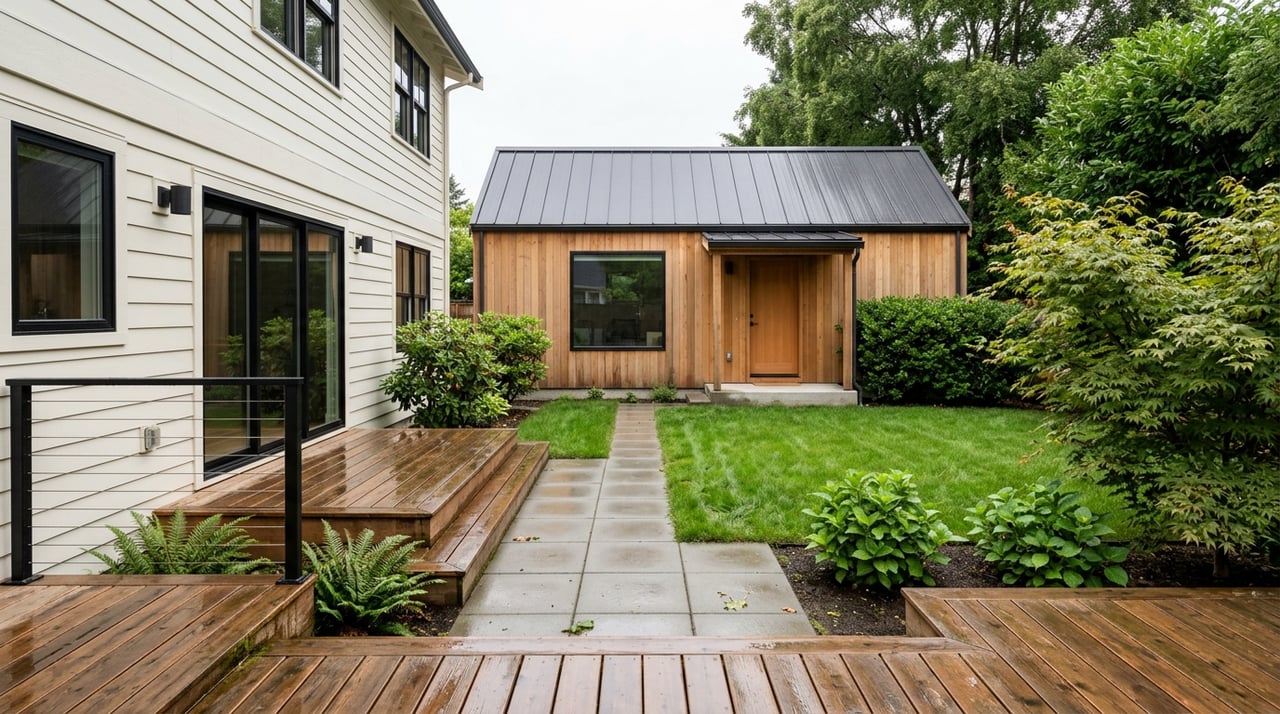
For many owners, an accessory dwelling unit may still be the most practical way to add housing without taking on a full redevelopment project. In Shoreline, an ADU is a separate, smaller home on the same lot as the main house.
The city says an ADU can be attached or detached. It must include its own kitchen, bathroom, living area, and entrance.
How Many ADUs Are Allowed
Shoreline allows up to two ADUs per lot. The city also says ADUs can be rented or sold separately from the main house.
That is a meaningful shift for owners thinking about flexibility, rental income, multigenerational living, or long-term property strategy. At the same time, ADUs count toward the maximum number of houses allowed on the lot, so the larger zoning picture still matters.
ADU Size Limits
In most cases, an ADU cannot exceed 1,200 square feet. Shoreline does make an exception for some same-roof, different-floor conversions, such as certain basement units.
That size cap is important if you are comparing a detached backyard cottage, an addition, or an internal conversion. The best fit often depends on the home’s layout, lot coverage, and how much open area the site can support.
ADU Parking Rules
Shoreline’s current ADU handout says parking is generally required in addition to parking for the main home. However, no ADU parking is required within one-half mile of a major or frequent transit stop.
The city may also waive parking when transit access and on-street parking conditions support it. Combined with the citywide parking changes adopted in 2025, that could improve feasibility on some lots, especially near transit.
ADU Permitting in Shoreline
If you are considering an ADU, the city’s process is fairly clear. Shoreline says all ADUs require a building permit and must meet building and fire code standards.
The city does not offer pre-approved ADU plans. Reduced impact fees apply, and Shoreline also states that frontage improvements are not required just because an ADU is added.
That combination can help owners plan more realistically. It also reinforces why early budgeting matters, since design, permit review, utilities, and code compliance will still shape the total cost and timeline.
When Middle Housing May Make More Sense
An ADU is often the simpler path because it adds housing incrementally. If you already own a home and want more flexibility without a full teardown, that may be the first option worth studying.
Middle housing may make more sense when you have a larger lot, a property in a more intensive neighborhood residential zone, or a long-term redevelopment goal. Depending on the parcel and applicable standards, that could mean a duplex, triplex, townhouse layout, stacked flats, or cottage housing.
It is important to treat that as a starting point, not a guarantee. Shoreline’s own framework makes clear that parcel-specific rules still control what can actually be built.
A More Advanced Path: Unit Lot Development
For owners and small investors thinking beyond one extra unit, Shoreline’s code also includes unit lot subdivision and unit lot development. In simple terms, this is a more complex ownership and redevelopment path tied to residential development with attached structures.
This is very different from adding an ADU in the backyard. It can be a useful concept for some redevelopment scenarios, but it requires more planning and a stronger understanding of the overall approval structure.
What Still Limits Development
A big takeaway from Shoreline’s updates is that the city is not allowing unlimited housing everywhere with no guardrails. The rules now allow more housing choices, but each site is still shaped by development standards.
Parcel Details Still Matter
Shoreline says new development in neighborhood residential zones is shaped by:
- Height limits
- Setbacks
- Lot coverage
- Parking standards
- Design standards
That means two homes on paper may have very different real-world options. A parcel’s dimensions, slope, layout, and existing improvements can all affect feasibility.
Trees and Critical Areas Matter Too
The city also notes that all middle housing remains subject to the tree code of the zone. On top of that, Shoreline is updating its critical areas code, and features like streams, wetlands, and landslide hazard areas can affect what can be built.
This is often where online zoning summaries fall short. A property may appear to qualify for a certain housing type, but trees, critical areas, or site constraints can change the outcome quickly.
What Buyers and Owners Should Do Next
If you own property in Shoreline or are thinking about buying there, the smartest move is to start with the basics. Confirm the zone, review lot size and dimensional standards, and look at the property’s practical constraints before assuming an ADU or middle housing plan will work.
Shoreline also recommends setting up an appointment with staff before submitting an application. That early step can help you understand whether your idea fits the parcel before you spend too much time or money on design work.
From a real estate perspective, these changes may affect how you evaluate a property’s long-term use and value. For some owners, the best opportunity may be a future ADU. For others, the real upside may come from renovation, rental strategy, or eventual redevelopment in a more intensive zone.
If you want help thinking through how Shoreline’s new housing options could affect a property you own or one you are considering, Samie Bryan brings a practical mix of brokerage, renovation, rental, and development-minded insight to the conversation.
FAQs
What is middle housing in Shoreline?
- Middle housing in Shoreline refers to housing types such as duplexes, triplexes, townhouses, stacked flats, courtyard apartments, and cottage housing that are compatible in scale and form with single-family homes.
How many ADUs can you have on a Shoreline lot?
- Shoreline allows up to two ADUs on a lot, and those ADUs count toward the maximum number of houses allowed on that lot.
Can a Shoreline ADU be sold separately?
- Yes. Shoreline’s ADU handout says an ADU can be rented or sold separately from the main house.
How large can an ADU be in Shoreline?
- In most cases, a Shoreline ADU cannot exceed 1,200 square feet, with limited exceptions for some same-roof, different-floor conversions.
Do Shoreline ADUs require parking?
- Generally yes, but no ADU parking is required within one-half mile of a major or frequent transit stop, and the city may waive parking in some cases based on transit access and on-street parking conditions.
Does Shoreline allow middle housing on every lot?
- No. What is possible depends on the property’s zone, lot size, setbacks, height limits, parking rules, tree code, critical areas, and permitting requirements.
What should Shoreline property owners do before applying for an ADU or middle housing project?
- Shoreline recommends setting up an appointment with city staff before submitting an application so you can review your property’s specific constraints and options early in the process.