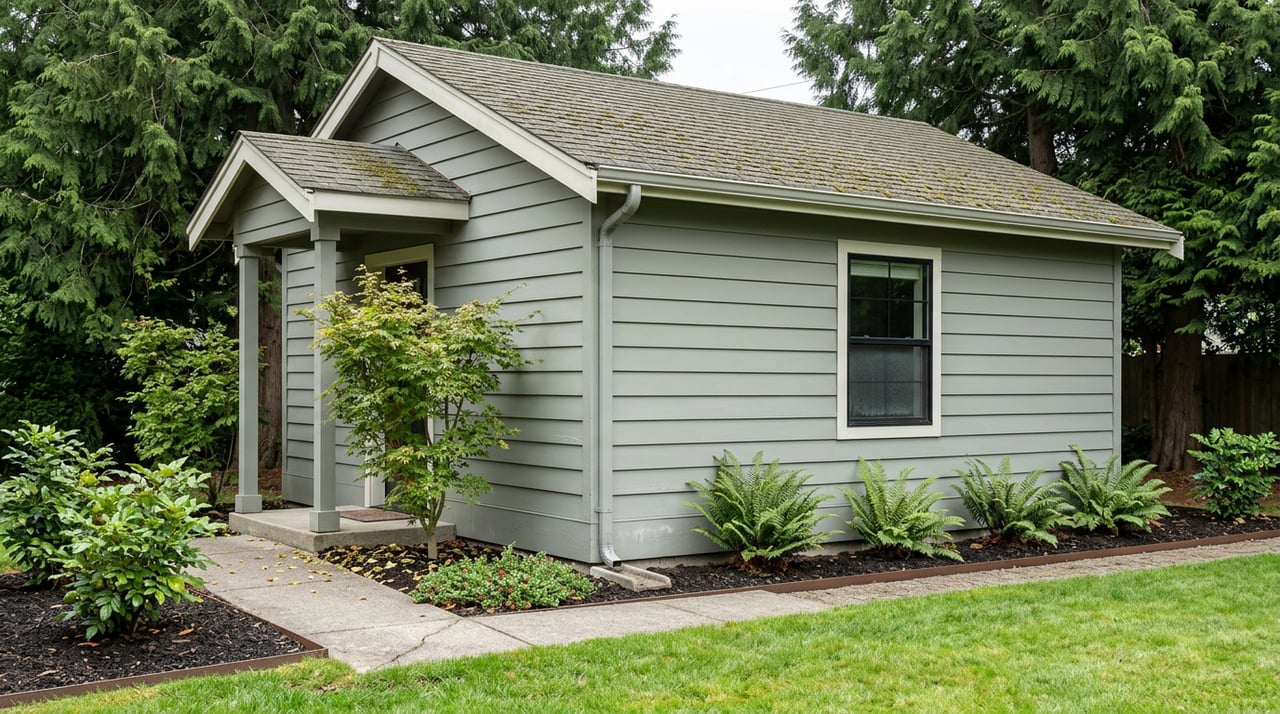
Pull up two pages on shorelinewa.gov and you'll get two different answers to the same question. The Planning and Community Development FAQ states plainly that the city's zoning code allows two accessory dwelling units per lot. A few clicks away, the Code Enforcement page describes a single ADU, tied to a requirement that the property owner or an immediate family member live in either the main house or the unit. Both pages are live right now. Neither has been taken down. And if you're a buyer, seller, or investor trying to understand what a Shoreline property with an ADU is actually worth, that gap is the thing that will catch you, not the zoning itself.
This isn't a hypothetical wrinkle. It's the kind of detail that surfaces at the worst possible moment in a transaction: during the appraisal, or when a lender asks for permit history on a unit everyone assumed was straightforward.
The state law moved faster than some city pages did
Washington's HB 1337 changed the baseline for ADUs statewide. Cities can no longer require owner-occupancy on a lot with an accessory dwelling unit, and cities with populations over 25,000 have to allow at least two ADUs per residential lot. Shoreline, which GatherADU reports has a population above 60,000, falls into that category. The law phased in through 2025, and by 2026 every Washington city planning under the Growth Management Act was expected to bring its local code into line, with a final compliance deadline of December 31, 2026 for jurisdictions whose periodic update falls at midyear, as MRSC explains.
Shoreline's zoning code has, according to its own Planning Department, already caught up: two ADUs allowed, no owner-occupancy mandate standing in the way. The Code Enforcement page reads like it's describing the version of the rule that existed before that update took effect. It's the kind of thing that happens when a city updates its zoning code on one timeline and its public-facing enforcement guidance on another. For a homeowner who found that page during a Google search, it's easy to walk away thinking they still need to live on-site, or that a second unit isn't allowed at all.
The Shoreline Municipal Code itself is current through an ordinance passed in February 2026, so the zoning language on the books does reflect the newer standard. The disconnect is between that code and the plain-English guidance the city publishes around it, which is exactly the kind of gap a real estate transaction has no patience for.
Why this shows up at the appraisal, not the listing
A permitted ADU and an unpermitted one look identical from the street. They are not identical on paper, and the difference matters most at financing.
An ADU that was built or converted without the correct permit typically can't be counted toward a home's square footage in an appraisal. That has a direct effect on the number a lender uses to underwrite the loan. It can also surface as a compliance issue during the sale itself.
A properly permitted unit works differently. Mortgage Porter notes that, depending on the loan program, projected rental income from a legal ADU can be used to help a buyer qualify for a larger loan amount. That single distinction, permitted versus not, is often the difference between an ADU that adds real, financeable value and one that's a bonus room with a hot plate as far as the lender is concerned.
If you're buying a Shoreline property where the listing mentions a "mother-in-law unit" or a "basement apartment," the permit history is worth more than the seller's description of it.
Parking costs can shift the math too
Parking mandates typically add somewhere between 5 and 15 percent to a project's cost and reduce how many units actually fit on a lot.
What the same dollar buys in different parts of Shoreline
Shoreline isn't one price point, and the financing path that fits one part of the city may not fit another. As of mid-2026, the range looks roughly like this:
| Area | Typical price range | Likely financing path |
|---|---|---|
| Richmond Beach, Innis Arden | $1,100,000–$1,300,000+ | Jumbo or high-balance conforming |
| Meridian Park, Echo Lake | $800,000–$950,000 | Conventional |
| North City, Ridgecrest | $700,000–$800,000 | Conventional or FHA |
| Townhomes near light rail corridors | $550,000–$700,000 | Conventional |
| Condos | $350,000–$550,000 | Conventional |
King County is a federally designated high-cost area, and the 2026 high-balance conforming and FHA loan limit for a single-family home sits at $1,063,750. That number matters more than it looks like it should. A Richmond Beach or Innis Arden purchase will frequently push past that limit and into jumbo territory, which comes with its own reserve and credit requirements. A North City or Ridgecrest purchase usually stays inside it. If an ADU's rental income is part of your qualifying strategy, knowing which side of that line your target property sits on changes the conversation you need to have with a lender before you write an offer.
A short list to work through before you waive anything
- Ask for the permit number on any existing ADU or DADU, then look it up directly through the city's online permitting portal rather than taking the listing's word for it.
- Find out whether the unit was permitted before or after Shoreline's code update, and confirm the permit terms in writing.
- Get your lender's appraisal treatment of the unit in writing before you remove a financing contingency, not after.
- If you're buying with ADU potential rather than an existing unit, confirm which rules apply to your specific lot.
A few questions this tends to raise
Does an unpermitted ADU always tank the appraisal? Not always, but it commonly gets excluded from the home's counted square footage, which lowers the appraised value relative to a comparable home with a legally established unit. The safest move is to have the permit status confirmed before the appraisal happens, not after.
If I already own a Shoreline home with an ADU, do I still need to live there? Under current state law, no city can require owner-occupancy as a condition of having an ADU. If you're relying on an older city document that says otherwise, that page hasn't caught up with the law.
Can rental income from a legal ADU help me qualify for a bigger mortgage? In some cases, yes, depending on the loan program. This is one more reason permit status is worth confirming early. It affects not just what the unit is worth, but what loan you can get in the first place.
Shoreline's ADU rules are more workable for buyers, sellers, and small investors than they were even two years ago. The catch isn't the rule. It's confirming which version of it actually applies to the property in front of you, and doing that before you're standing at the closing table wondering why the appraisal came in short.
If you're weighing a Shoreline purchase or sale where an ADU is part of the equation, or you want a read on what your own property could support, Samie Bryan has spent two decades in Seattle real estate with hands-on experience in renovation, rental performance, and the zoning questions that come with both. For more on how the city's density rules fit together, the earlier look at Shoreline's middle housing and ADU options is a good next stop, and the Shoreline neighborhood page has more on what's currently available. Let's Connect through the contact page when you're ready to talk specifics.
This article is general information, not legal, tax or financial advice. Consult a qualified professional about your situation.